
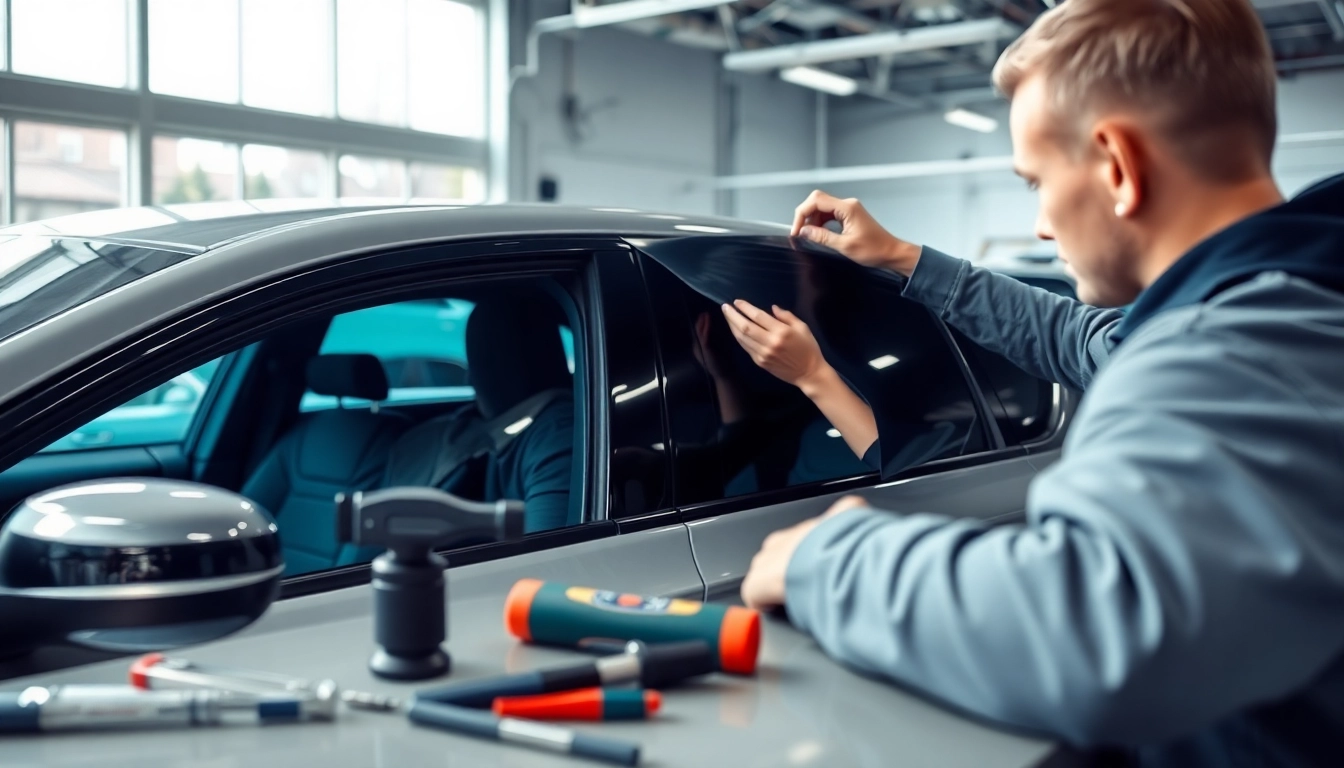
Understanding Window Tinting Basics
What is Window Tinting?
Window tinting refers to the process of applying a thin film or coating to the windows of vehicles, buildings, or other structures. This film serves multiple purposes, including enhancing privacy, reducing heat, blocking UV rays, and improving the overall aesthetic of the surface it is applied to. The installation process typically involves precise measurements and cutting of the film to fit the windows accurately, ensuring a clean and professional appearance. Many consumers seek window tint near me to find quality products and installation services within their local area.
Benefits of Window Tinting
Investing in window tinting can provide a myriad of benefits, ranging from comfort to added safety:
- Heat Reduction: Tinted windows can significantly reduce the amount of heat entering a vehicle or building, leading to a more comfortable environment and less reliance on air conditioning.
- UV Protection: High-quality window films can block up to 99% of harmful ultraviolet rays, which can contribute to skin cancer and fade the interior of your vehicle.
- Glare Reduction: Tinted windows decrease glare caused by sunlight, making it easier to see while driving or during high sun exposure periods.
- Enhanced Privacy: Tints can provide privacy inside your vehicle or a building, making it harder for outsiders to see in.
- Improved Aesthetics: Well-chosen window tints can enhance the overall look of your vehicle, giving it a sleek and polished appearance.
- Increased Safety: In the event of an accident, window films can hold shattered glass together, preventing it from scattering and reducing the risk of injury.
Types of Window Tint Films
Window tint films come in various types, each designed to meet different needs and preferences:
- Dyed Window Film: This is an economical option that uses dyed polyester to provide color and heat reduction. It effectively reduces glare but may not block UV rays as efficiently as other types.
- Metalized Window Film: This film incorporates metal particles that reflect heat and UV rays while adding durability. However, it may interfere with electronic devices due to its metallic components.
- Carbon Window Film: A more advanced option, carbon films offer excellent UV protection and heat rejection while not fading over time. They have a matte finish, reducing glare without a reflective surface.
- Ceramic Window Film: The latest innovation, ceramic films block significant amounts of heat and UV light without interfering with visibility or electronic devices. They are high-performance options for those seeking superior benefits.
- Hybrid Window Film: This film combines both dyed and metalized technology to achieve a balanced performance concerning heat reduction and appearance.
Choosing the Right Window Tint Near Me
Factors to Consider When Selecting a Tint
When it comes to choosing the right window tint, several factors come into play:
- Local Climate: Consider how hot or sunny your region is when choosing the type of film. In hotter climates, films that offer higher UV and heat blocking properties are advantageous.
- Purpose of Tinting: Determine whether you primarily want added privacy, glare reduction, heat protection, or aesthetics, as these will guide your choice significantly.
- Legal Regulations: Each state or city has different laws regarding acceptable tint levels. It’s essential to be familiar with these regulations to avoid penalties or having to remove the film later.
- Warranty Information: Seek films that come with a warranty to protect your investment against defects and discoloration.
- Appearance: Choose a tint that matches the style and color scheme of your vehicle or property aesthetically.
Legal Regulations for Window Tinting
It is crucial to understand local regulations governing window tinting, as they vary from one location to another:
- VLT Percentage: The Visible Light Transmission (VLT) percentage indicates how much light can pass through the tinted window. Laws may specify minimum VLT percentages for different windows in vehicles.
- Windshield Regulations: Some areas may restrict tinting on windshields to only the top few inches, while others might allow more extensive coverage.
- Reflectivity Levels: Certain jurisdictions impose limits on how reflective tints can be, particularly on vehicles, to ensure safety and visibility for drivers.
How to Compare Local Tinting Services
Selecting the best local tinting service requires careful comparison of various factors:
- Experience: Research the experience and qualifications of each service. Established companies with a good reputation are likely to provide superior quality.
- Reviews and Testimonials: Read online reviews and testimonials to gauge customer satisfaction. Look for feedback that addresses quality, service speed, and professionalism.
- Portfolio: Assess the provider’s previous work. A well-maintained portfolio showcasing their best installations can offer insights into their capabilities.
- Pricing: Obtain estimates from multiple services, ensuring you ask about what’s included in the price to make informed comparisons.
- Warranty and Aftercare: Look for services that offer warranties on their work and film. It’s also wise to inquire about aftercare services or recommendations for maintenance.
Installation Process of Window Tint
Preparing Your Vehicle
Before the tinting process begins, adequate preparation is essential to ensure the best results:
- Clean the Windows: All windows should be thoroughly cleaned to remove dirt and grease, as any contaminants can cause adhesion issues with the tint.
- Inspect the Surface: Look for scratches or damage on the window glass that could affect the film’s application and longevity.
- Remove Accessories: If possible, remove any accessories such as stickers or window visors that may obstruct the application.
Steps for Professional Installation
A typical professional window tint installation follows these steps:
- Film Cutting: The installer measures and cuts the film to fit each window accurately, which can involve creating templates for a precise fit.
- Application: The film is applied using a solution to allow for adjustment and to prevent air bubbles from forming.
- Smoothing: Using a specialized tool, the installer smooths the film onto the glass, ensuring proper adhesion and removing any trapped air bubbles.
- Curing: The installer allows the film to cure properly, which may take several days during which you should avoid rolling down your windows.
Common Mistakes to Avoid
To maximize the success of your window tinting experience, avoid these common pitfalls:
- DIY Installation: Attempting to apply tint without professional experience can lead to mistakes such as uneven application or trapped bubbles.
- Incorrect Film Selection: Choosing the wrong type of film for your needs can lessen benefits like UV protection or add safety risks.
- Ignoring Local Laws: Failing to consider local regulations may result in illegal tinting, which could require costly removal or compliance adjustments.
Maintaining Your Tinted Windows
Cleaning Tips for Window Tint
Proper cleaning of tinted windows helps maintain their appearance and performance:
- Use Recommended Cleaners: Avoid ammonia-based cleaners, as they can damage the tint. Instead, opt for pH-neutral alternatives or solutions specifically designed for tinted windows.
- Soft Cloths: Use microfiber cloths to prevent scratching the film while cleaning.
- Gentle Techniques: Wipe in a circular motion and avoid excessive pressure that may disturb the film.
How to Prolong the Life of Your Tint
Enhancing the lifespan of your window tint can be simple with the right practices:
- Avoid Rolling Down Windows: For at least a few days post-installation, refrain from rolling down your windows to allow the film to cure correctly.
- Regular Inspections: Frequently check the edges of the tint for peeling or damage and address issues promptly to prevent further deterioration.
- Limiting Excessive Sun Exposure: Whenever possible, park in shaded areas or use car covers to minimize the amount of direct sunlight on your tinted windows.
Signs Your Tint Needs Replacement
Window tint may need replacing under certain conditions, including:
- Discoloration: If your tint is fading or changing colors, it may no longer offer adequate UV protection.
- Peeling: Edges that start to peel away from the glass indicate the need for removal and replacement to restore a polished look.
- Air Bubbles: Persistent air bubbles or wrinkles suggest that the installation did not go as planned and may require a professional touch-up or replacement.
FAQs About Window Tint Near Me
How long does window tint last?
Most window tint films last between 5 to 15 years, depending on the type of film, installation quality, and maintenance. High-quality films often last longer and offer better performance.
Can I DIY my window tint application?
While DIY kits are available, professional installation ensures better results, reducing the likelihood of air bubbles and incorrect alignments that DIY efforts may cause.
What are the costs associated with window tinting?
Costs can range from $100 to over $500, depending on vehicle size, film type, and the service provider’s reputation. It’s best to obtain multiple quotes for comparison.
Does window tint block UV rays?
Yes, high-quality window tint can block up to 99% of harmful UV rays, protecting both passengers and upholstery from damage over time.
Are there different tint percentages available?
Yes, window tints are available in various percentages, indicating the amount of visible light that can pass through. Lower percentages provide darker tints, while higher numbers allow more light.